

Let’s be honest. If you’re reading this, you know the struggle.
You’ve probably spent countless hours on the treadmill, skipped dessert more times than you can count, and done enough planks to last a lifetime.
And yet, that one area—that stubborn belly fat—just refuses to budge.
You feel frustrated, maybe even a little defeated, thinking you must be doing something wrong or that you just have “bad genes.”
Stop doing what doesn’t work.
The Hard Truth I Tell My Clients
Here is the truth about stubborn belly fat: The reason belly fat sticks around isn’t because you aren’t working hard enough; it’s because you are using the wrong tool for the job.
You’re using cardio to try and outrun a metabolic problem.
Cardio, on its own, is a short-term fix for a long-term metabolic challenge.
It burns calories while you’re doing it, but it does very little to change your body composition or rev up your metabolism in the long run.
In fact, excessive cardio, especially when paired with aggressive dieting, often increases stress hormones, which can actually encourage your body to store fat right where you don’t want it!
The Solution
Get ready to let go of the treadmill guilt and finally see real change.
The fix is not more cardio; the fix is building resilience.
THIS strategy is built on three principles:
1. Heavy Strength Training: Build muscle to permanently raise your metabolism.
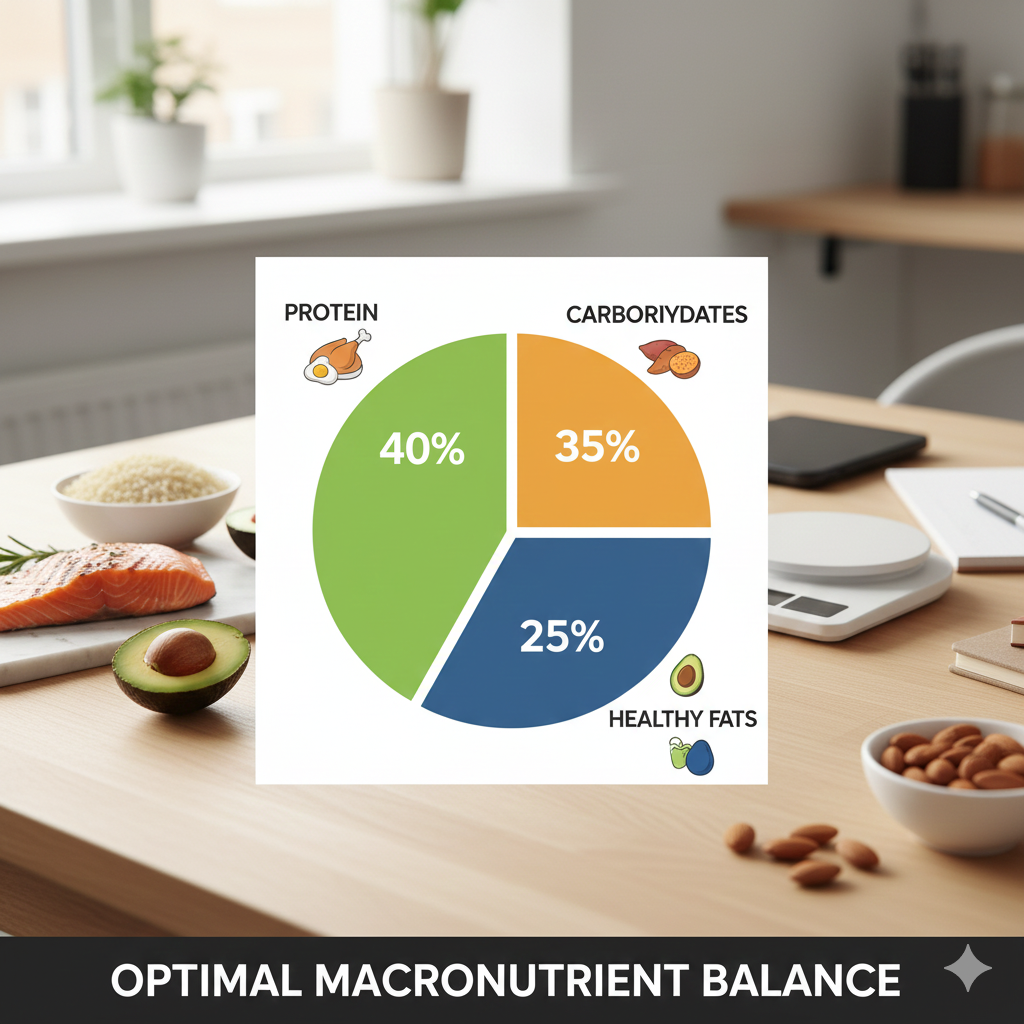
2. Optimal Macro Balance: Fuel your body correctly, making protein priority number one.
3. Hormone-Aware Recovery: Manage the internal chemistry that dictates where your body stores fat.
Stop dieting and start sculpting.
It’s time to switch tools and get the results you deserve.
Here’s a breakdown of exactly how we fix this.
Why Muscle is the Metabolic Fix

Let’s address the biggest mistake I see women making: metabolic misuse.
When you constantly rely on excessive, chronic cardio—especially when you’re also slashing calories—your body doesn’t see that as a fitness activity; it sees it as a threat.
It adapts by slowing down your metabolism to match your lower caloric intake and activity level.
You become incredibly efficient at being slow, and your body starts sacrificing metabolically expensive muscle tissue just to save energy.
That’s why you hit that dreaded weight loss plateau and why the scale stops moving even though you feel exhausted.
We don’t want efficiency; we want expenditure.
The most powerful tool we have to raise your basal metabolic rate—the calories your body burns simply existing—is muscle.
Muscle tissue is metabolically expensive; every kilogram you build requires your body to burn more calories, 24/7, even when you’re sitting on the couch.
This is the definition of a high-speed metabolism.
To achieve this, we rely on the core principle of progressive overload.
This means you must consistently challenge your muscles by increasing the weight, reps, or intensity of your lifts.
You need to be in the gym lifting heavy weights that feel hard, forcing that adaptation.
The goal is to stop chasing weight loss and start chasing body recomposition: shedding fat while simultaneously building lean, dense muscle that turns you into a fat-burning machine.
Protein First—Fueling the Metabolic Engine

Lifting heavy weights is half the battle.
Building a powerful body requires the right materials, and in the world of body recomposition, that material is protein.
For many years, diet culture has told you to fear carbs or fat, but the real metabolic game-changer is often neglected.
We need to shift our focus from simply counting calories to optimizing your macronutrient ratio, placing protein front and center.
Protein is essential because it provides the amino acids necessary to repair and build the muscle tissue you break down during your heavy lifts—it’s non-negotiable for muscle synthesis.
It’s also incredibly satiating, meaning you feel fuller for longer, naturally controlling overall caloric intake without the constant hunger pangs.
Crucially, protein has a much higher Thermic Effect of Food (TEF) than carbs or fat—it actually costs your body more energy to digest and process, giving you a tiny metabolic edge with every single meal.
If you’re serious about seeing that stubborn fat melt away, you need to commit to high-protein targets, treating every meal not just as food but as a high-octane fuel delivery system for your newly built muscle.
The Smart Deficit—Creating the Energy Gap

Protein is the building block, while energy balance remains the foundational principle of fat loss.
To force your body to tap into stored fat reserves, you must consume fewer calories than you burn—a state known as a calorie deficit.
However, the common mistake is making this deficit too severe.
A drastic cut will crash your energy levels, spike cortisol, and force your body to break down precious muscle tissue for fuel, defeating the entire purpose of your hard work at the gym.
The ideal approach is a moderate, sustainable deficit (usually 300-500 calories below maintenance) that works in conjunction with your heavy lifting.
The weight training sends a clear signal to your body: “Keep the muscle; we need it for survival.”
The high protein intake provides the necessary amino acids, and the deficit ensures that when your body looks for energy, it finds the stored fat rather than catabolizing muscle.
This triple-pronged strategy—heavy training, high protein, and a moderate deficit—is the blueprint for body recomposition success.
The Strategic Role of Training and Activity

To maximize fat loss while preserving muscle, your training needs to be intentional.
Heavy resistance training (lifting weights 3-5 times per week) is non-negotiable, as it is the primary stimulus that tells your body to retain muscle mass during a caloric deficit.
However, for stubborn fat, you must strategically layer in cardiovascular exercise.
High-Intensity Interval Training (HIIT) is highly effective for improving insulin sensitivity and maximizing the post-exercise calorie burn.
Crucially, you should also incorporate low-intensity steady-state (LISS) cardio, such as a brisk walk, performed in a fasted state or immediately following resistance training.
LISS, being less taxing, helps increase overall daily energy expenditure (NEAT) and is believed to favour the oxidation of fat for fuel, making it a critical tool for slowly chipping away at those hard-to-move reserves without compromising muscle recovery or causing excessive stress.
The Crucial Role of Sleep, Stress, and Hormones
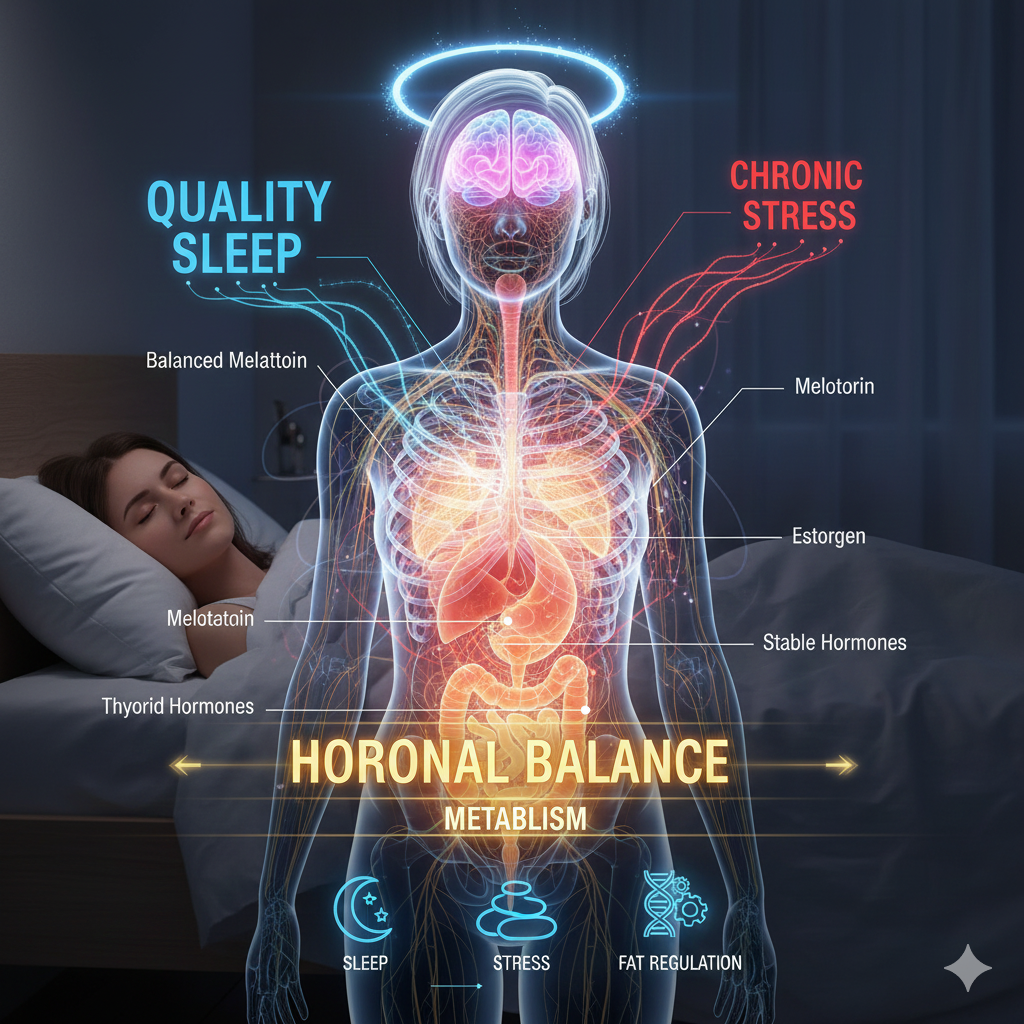
Your diet and training will dictate the deficit; the mobilization of stubborn fat is heavily dictated by your internal hormonal landscape, primarily cortisol.
Cortisol, the body’s main stress hormone, is highly fat-storing in the abdominal region.
Chronic high stress, poor sleep quality, or insufficient sleep (less than 7 hours) significantly elevates circulating cortisol, effectively working against your calorie deficit by increasing appetite, impairing insulin sensitivity, and favouring fat storage around the midsection.
Prioritize optimizing sleep hygiene—consistent bedtime, cooler room temperatures, and limiting screen time before bed—and incorporate daily stress mitigation practices like mindful breathing, meditation, or light mobility work.
Addressing these environmental factors is often the final key to unlocking stubborn fat reserves.
Consistency Is The Only Breakthrough.
Ultimately, conquering stubborn belly fat isn’t about finding a secret supplement or a new exercise; it’s about relentlessly applying consistent effort across all three pillars:
a precise calorie deficit,
strategic high-intensity training
a commitment to lifestyle factors like sleep and stress management.
The body respects consistency, and while the process may be slow, persistence is the only metric that guarantees success.
Instead of chasing quick fixes, focus instead on building sustainable habits that honor your hormones and your health.
Are you ready to stop guessing and eliminate the struggle and build a proven, personalized strategy tailored to your unique body and goals?
If you’re serious about transforming your physique and want direct guidance, support, and accountability, reach out today and start your transformation now.